Tag Archives: Workforce Education and Training

Meet ODE’s Workforce, Education and Training (WET) Team!
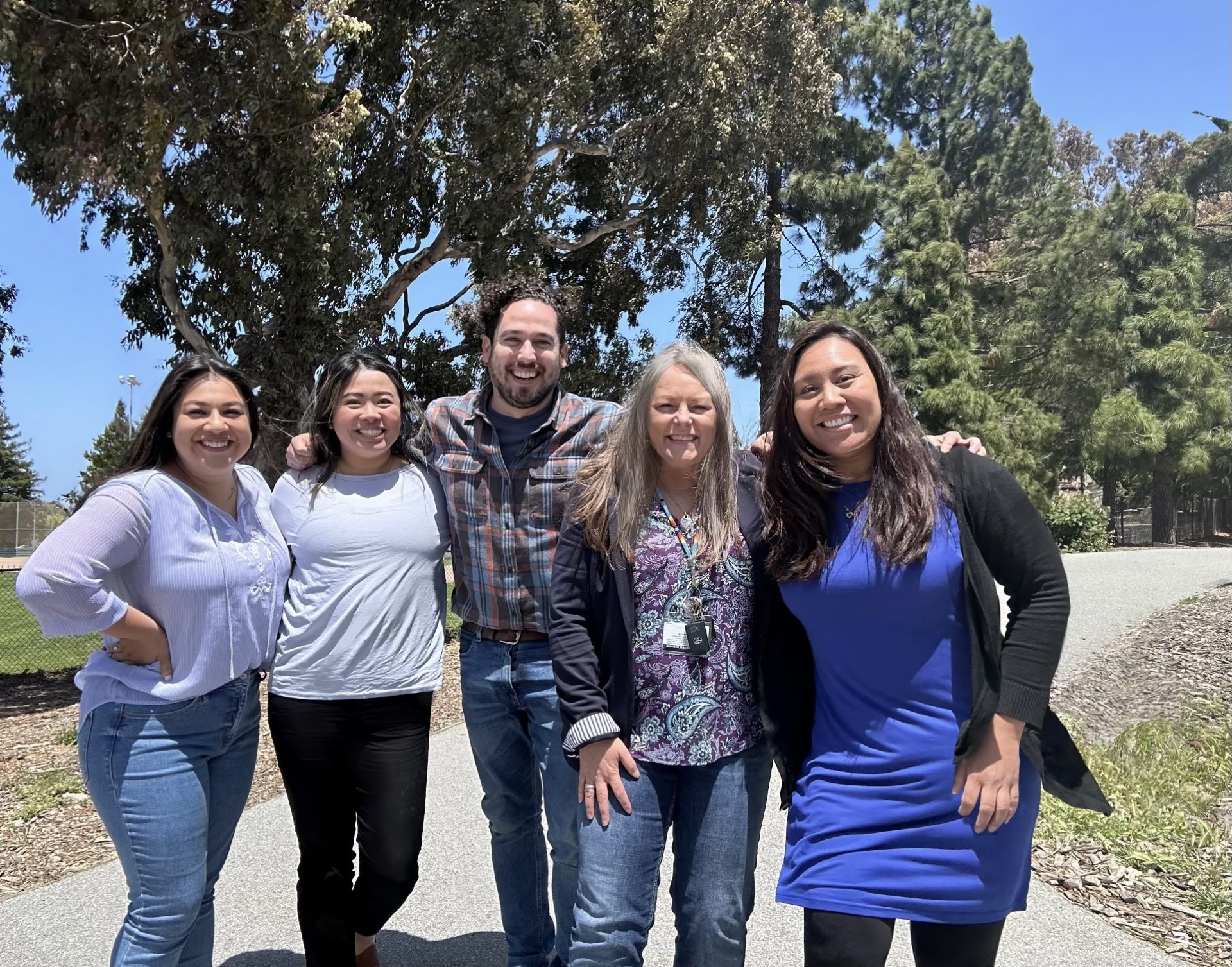
Angela Quiroz, Elise Cabilatazan, Andrew Tardiff, Stacy Williams, Irene Pham

The love of learning, hope for growth and passion to be part of the fight for equity are some of the values that drives BHRS Office of Diversity & Equity‘s WET team. The WET team, consisting of new and seasoned members, is excited to come together to continue fostering growth within our system while also seeking to accomplish established goals and support the learning needs of our staff through a variety of trainings, workshops, and programs.

In the upcoming fiscal year, the WET team is striving to bring back a number of trainings both in-person and virtual including Applied Suicide Intervention Skills Training (ASIST), Dialectical Behaviour Therapy (DBT), Prevention and Management of Assaultive Behavior, and Motivational Interviewing, to name a few, as well as increasing staff’s access to Continuing Education (CE) eligible trainings.

Moreover, the internship program is spurring to action and preparing to welcome our next round of clinical and ODE interns. The WET team is kicking things off with an in-person orientation; an event that has not happened in 2 years due to the pandemic. A number of interns will benefit from being identified as cultural stipend participants and have the opportunity to work alongside one of the Health Equity Initiatives (HEIs) on a community related project. The internship program is also being revamped to include new outreach strategies to help bolster the training opportunities offered in our county.

We aim to do our part to support our teams with their professional and personal growth and will continue to look for ways to improve and excel.

Written by Irene Pham (she/her), BHRS Office of Diversity and Equity

“Living Into Our Mission” by Dr Erica Britton

Isn’t it true that “everyday life” teaches us lessons we didn’t know we needed to learn?  Or, that there are events that happen as a part of our daily lives that shine a light on things that need to be seen?  I think so.   Recently, I’ve had the opportunity to spend a lot of time with a healthy, vibrant, joyful 76-year-old with no major health problems, my mother*, a Black woman who, as a teenager, migrated with her family from the American South to East Palo Alto in the 1960s.  Lately, she has been experiencing pain and other symptoms that are far outside her normal daily living experiences.  The symptoms were starting to take a toll on her emotionally.  She asked me to “sit in” on a virtual Doctor’s appointment with her.  When she described the pain and swelling, she is experiencing, the Doctor asked her several follow up questions which Mom answered succinctly without much elaboration.  Based on Mom’s answers and her upbeat, cheerful tone, the Doctor suggested compression stockings.    That would have been the end of the appointment.  Instead, Mom has two upcoming medical procedures that are going to improve her life both physically and psychologically.  So, what happened? Why does she have two medical procedures instead of compression stockings? After all, Mom reported her experience.  The Doctor who has a good relationship with Mom, listened closely and did an assessment. What had happened was, the Doctor was not aware of Mom’s deft use of African American English and code-switching.  Since I had seen the swelling and knew her actual level of discomfort, I asked Mom some additional questions and asked her to share her answers with the Doctor. Once the Doctor heard the additional information, she insisted that Mom come for an in-person visit.  The result of the in-person visit revealed two significant problems which would have otherwise been missed.

Consider this. Several years ago, a local Black psychiatrist was called to the emergency room of a Bay Area hospital. The ER staff did not know what to do to support or contain a man absolutely overcome with grief. His grandmother had been shot by a stray bullet, just a few houses down from her own home, and now, she lay dead on a gurney in the ER, despite the efforts of determined physicians. The Grandson was not screaming or shouting epithets or kicking over furniture. He was not violent by any definition. He was doubled over weeping, rocking back and forth, and humming amazing grace. ER staff had alerted security because he would not leave his grandmother’s side. He continued to weep, rock and sing. He was not going to leave her. The psychiatrist went to the emergency room, was briefed by the staff, and left them to be with the young man. He stood and watched from a distance for a few minutes and understood exactly what he was seeing. Grandson was expressing grief in the only language that he knew–the gospel music of his home and community–and rocking his body for comfort. In the aftermath of that trauma, he needed to be exactly where he was, doing exactly what he was doing.

Read more

Become a Cultural Humility Trainer Through 2-day Training!

garage

Become a Cultural Humility trainer with creators of the multicultural-affirming tool, Melanie Tervalon, MD, MPH and Jann Murray- Garcia, MD, MPH. As a trainer, you will be able to teach Cultural Humility trainings to other organizations in order to further educate the importance of critical self- reflection and life-long learning; changing power dynamics for client focused care; advocating for and maintaining institutional consistency; and community- based care and advocacy. 

Please note: You may only apply if you have already taken Melanie Tervalon’s Cultural Humility training as a participant. 

Deadline to apply is January 31st. Application can be found here

For more information, contact Erica Britton at ebritton@smcgov.org or (650) 372- 6153. 

Cultural Stipend Internship Program Projects are a Wrap!

NAI Agenda Image


The 2015-16 Cultural Stipend Internship Program (CSIP) Awardees have completed and presented their cultural humility related projects to clinic sites, Health Equity Initiatives (HEI), and community groups. 15 awardees spent the past academic year participating in one of nine HEIs, and coordinating a year-long project, in addition to their regular duties as clinical interns.

CSIP provides a stipend of $5,000 awarded annually to up to 20 interns. Awardees are selected based on their expressed interest in and commitment to cultural awareness and social justice in both community and clinical settings; personal identification with marginalized communities; and/or lived experience with behavioral health conditions. Priority is given to bilingual and/or bi-cultural applicants whose cultural background and experience is similar to underserved communities in San Mateo County. Once selected, awardees are then matched with an HEI and tasked with conducting a project that helps BHRS become more culturally sensitive on a systemic level, and more accessible to marginalized communities.

millhs_022516This year’s projects consisted of 2 Clinical Trainings, 4 Community Events, 4 Research Projects, 2 Communication Campaigns, and 1 Research Paper. All projects are posted on the CSIP webpage. They are posted with the intention of being utilized, duplicated and institutionalized by BHRS staff and partner agencies. Please feel free to share the ways in which you are using them. If you have any questions, contact Kim Westrick (kwestrick@smcgov.org).

CSIP is truly a collaborative effort between interns, supervisors, Health Equity Initiative co-chairs and members, the Office of Diversity and BHRS staff.  Thank you to all of those who continue to dedicate their time and energy to making these projects a success and providing the intern’s an invaluable experiences and opportunity to make a difference.Predair Opening Slide Image

CSIP applications for 2016-2017 are currently being reviewed by the committee and awardees will be announced in August, 2016.